D is for Death

Screen shot 2010-11-26 at 12.30.40

(This is the fourth in my series, ABCs of Hospital Chaplaincy. Read other posts in the series here.)

“He then greeted Death as an old friend and went with him gladly, departing this life as equals.”

Sometimes I forget how different my perspective is from that of most “normal” people. Then my roommate asks me, “How was work last night?” I reply, “Not too bad. Just two deaths and a trauma.” She laughs and I look at her quizzically. “Sorry,” she says, “but you’re the only person I know who would call two deaths in one shift ‘not too bad.’ Your job is so weird.” I guess she has a point. Working in a hospital, encountering death on such a routine basis, is more than a little weird. Continue reading “D is for Death”

ABCs of Hospital Chaplaincy: A is for Advance Directive

south-carolina-health-care-power-of-attorney-form

How do you want to die? Have you ever thought about it? It’s a line of thinking most of us would probably like to avoid, but as a hospital chaplain, my job involves a lot of thinking and talking about death. And in the hospital where I work, chaplains also have conversations with people who are not near death about what they want to happen when they get to that point. Upon check-in, every patient is asked whether they would like information about Advance Directives. If he/she says yes, a chaplain will go visit him/her within the next forty-eight hours, carrying a blank South Carolina healthcare power of attorney form. Where I work, it is one of the basics of what a chaplain does.  Continue reading “ABCs of Hospital Chaplaincy: A is for Advance Directive”

Living Up to My Name

Eastersign

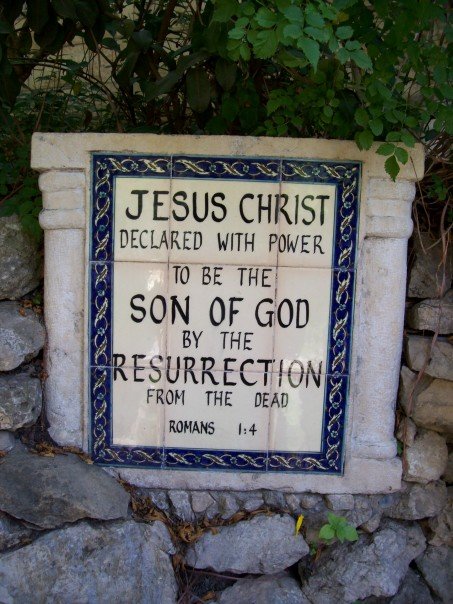
I’ll never forget the day I got called out in my Greek class. My mind had been wandering as the professor went over the vocabulary words on the white board, and I thought he had caught me when I heard him say my name. “Stacy! Did you know,” he asked, “that your name is the diminutive form of Anastasia? And that name comes from anastasis. So the root of your name is -” He tapped the board where the Greek word was written, and I read the English translation next to it. “Resurrection,” I said in wonder. No, I definitely had not known that that’s what my name means. I’m certain my parents didn’t know either when they chose the name. But all these years later, I’d like to think it fits. Continue reading “Living Up to My Name”

Endings and Beginnings

holy-week

He was much too old for lullabies, already a teenager. If he had been able to speak, he may have protested, but I doubt it. His mother lay in the hospital bed next to him, wrapped her arms around him. A few hours earlier, she had been full of anxiety and anger, lashing out at anyone who so much as hinted that her son was dying. But I did more than hint. I confronted her with the reality that he was coming to the end, and that he needed her now as much as ever. The anger exploded — then disappeared. And in her son’s last hours, she did as good a job of anyone I’ve ever seen at saying goodbye. She told him she loved him, that every day with him was a gift, and then for a painfully long time, she sang him to sleep. She made sure that the last sound he would hear was not beeping monitors or her anguished sobs or his own raspy final breaths, but that first sound — his mother’s voice, singing to him the same songs she had sung when he was a baby. Continue reading “Endings and Beginnings”

Worse Than Death?

Recently, a friend of a friend asked me a question about death.  She is a new employee at a hospital in another state.  Though we haven’t seen each other in years, she remembered that I was a chaplain, got my number from our mutual friend, and wanted to talk.  “I’m not a religious person,” she began.  “I’m not even sure I believe in God.  But if there is a God, I need to know if he’ll judge me for this.  I’ve killed three people already.”  Confused, I asked her to explain about these killings.  She told me how she had been the one to remove the breathing tubes and turn off the ventilators for three terminal patients.  “I know it’s my job,” she said.  “And it’s what the families decided to do, and the patients probably would have died anyway.  But they died sooner because of me, you know?  I’m the one who took them off the vent.  They stopped breathing at that moment because of me.  Will God punish me for that?”  I could hear the tremor in her voice.  “I wanted to do this job to help people.  And I do.  I help a lot of people.  But I didn’t count on being the actual instrument of death for some patients, you know?  I don’t know how to deal with that.” Continue reading “Worse Than Death?”